
Why the Demand for Affordable Housing in Navi Mumbai is Skyrocketing
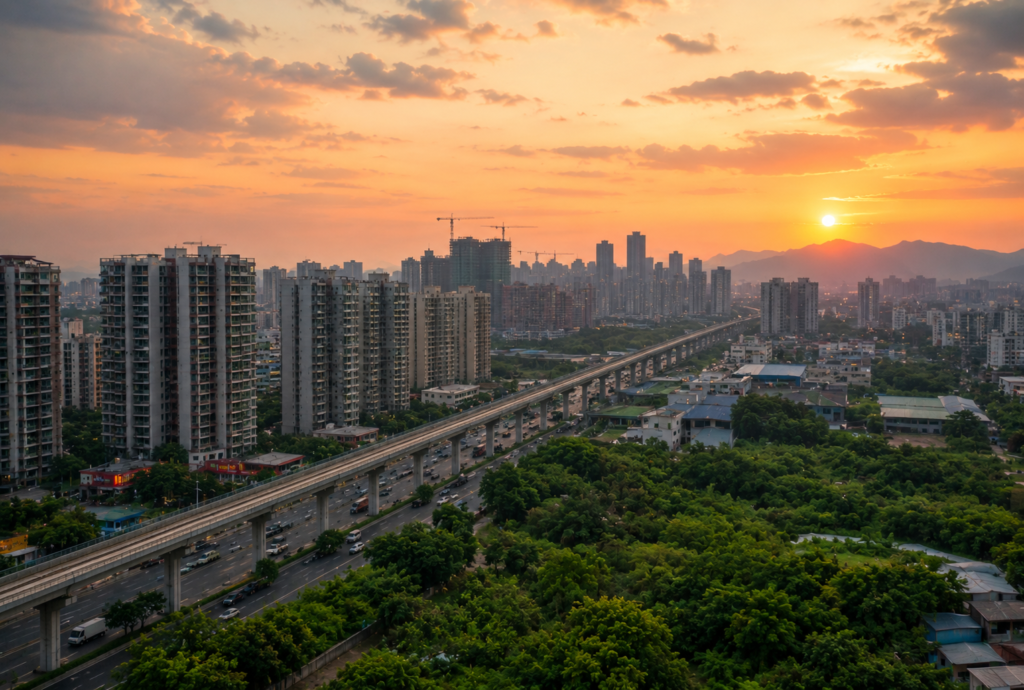
If you’ve been tracking the Mumbai real estate market recently, you’ve probably noticed a massive shift. The skyline is dominated by towering cranes, new residential launches are happening every weekend, and house hunters are flocking to one specific region: Navi Mumbai.
There was a time when owning a home in proper Mumbai was the ultimate dream. But let’s face the harsh reality of 2026—property prices in Mumbai and its immediate suburbs have reached such astronomical heights that a middle-class family buying a decent 1BHK or 2BHK there feels mathematically impossible.
Navi Mumbai is no longer just a “back-up option” for people priced out of Mumbai. It has become the main event. Here is a breakdown of why this region’s affordable housing market is absolutely exploding.
1. More Square Footage, Less Financial Stress
Let’s talk numbers first. In Mumbai, a premium price often buys you what locals jokingly call a “matchbox in the sky.” In contrast, Navi Mumbai’s emerging pockets—like Taloja, Panvel, Ulwe, Pushpak Nagar, and Dronagiri—still offer breathing room for your wallet and your family.
You aren’t just buying four walls here; affordable segment projects in these areas frequently come packaged with modern amenities like gyms, clubhouses, dedicated parking, and kids’ play areas. For a first-time homebuyer, the value-for-money proposition is simply unbeatable.
2. The Airport Effect: The Ultimate Game Changer
Ever since the Navi Mumbai International Airport moved from a blueprint to actual physical structures nearing completion, the entire real estate dynamics of the region shifted gears.
There is a golden rule in real estate: Follow the mega-infrastructure.
The airport isn’t just about catching flights; it is bringing a massive wave of commercial business districts, luxury hotels, and logistics hubs. Buyers realize that the properties labeled “affordable” today will naturally morph into “premium” locations once the commercial ecosystem peaks. People are locking in prices now before they get priced out later.
3. The Travel Time Myth Has Been Busted
A few years ago, the biggest hesitation with Navi Mumbai was the daily commute. People dreaded the thought of spending hours stuck in traffic trying to get into the main city.
Today, that argument is entirely dead, thanks to two major infrastructural milestones:
The Atal Setu (MTHL): This mega-bridge has fundamentally altered geography, slashing the travel time between South Mumbai and Navi Mumbai to a matter of minutes.
The Mega Rail & Metro Network: With the expansion of the Navi Mumbai Metro and improved suburban rail connectivity (like the Nerul-Uran line), commuting has become incredibly streamlined.
People now realize they can easily work in corporate hubs across Mumbai while enjoying a much smoother, stress-free commute from their home in Navi Mumbai.
4. A Superior, Planned Lifestyle
Mumbai is iconic, but it is also hyper-congested, noisy, and starved of green spaces. Navi Mumbai, on the other hand, was built to breathe.
It is a meticulously planned city. Buyers are migrating here because they want:
Wide, multi-lane roads and organized sectors.
Massive open green spaces, like Kharghar’s Central Park and various holding ponds.
Excellent civic zoning where top-tier schools, multispecialty hospitals, and retail malls are spaced out evenly, ensuring you don’t have to battle gridlock just to run basic errands.
5. The Investor’s Paradise
It isn’t just families looking to move in (end-users) who are driving this boom; seasoned investors are incredibly active in the affordable segment here.
With Mumbai’s real estate market hitting a saturation point in terms of capital appreciation, Navi Mumbai offers the perfect growth curve. Areas surrounding Panvel and the upcoming airport influence zone (NAINA) are seeing steady year-on-year appreciation. Additionally, the rental market is exceptionally strong because young working professionals are constantly moving to the city for manufacturing, IT, and logistics jobs.
The Verdict
Navi Mumbai has officially outgrown its title as Mumbai’s “satellite city.” It is a self-sustaining, rapidly evolving powerhouse.
If you are tired of paying rent that burns a hole in your pocket, or if you’re looking for an investment that will actually outpace inflation, ignoring Navi Mumbai right now is a massive missed opportunity. A home is more than just concrete—it’s an anchor for your family’s financial future. And right now, that future is unfolding in Navi Mumbai.
What’s your take? Are you exploring options in rising hubs like Ulwe or Panvel, or do you still prefer sticking closer to the traditional Mumbai suburbs? Let’s talk in the comments below!